

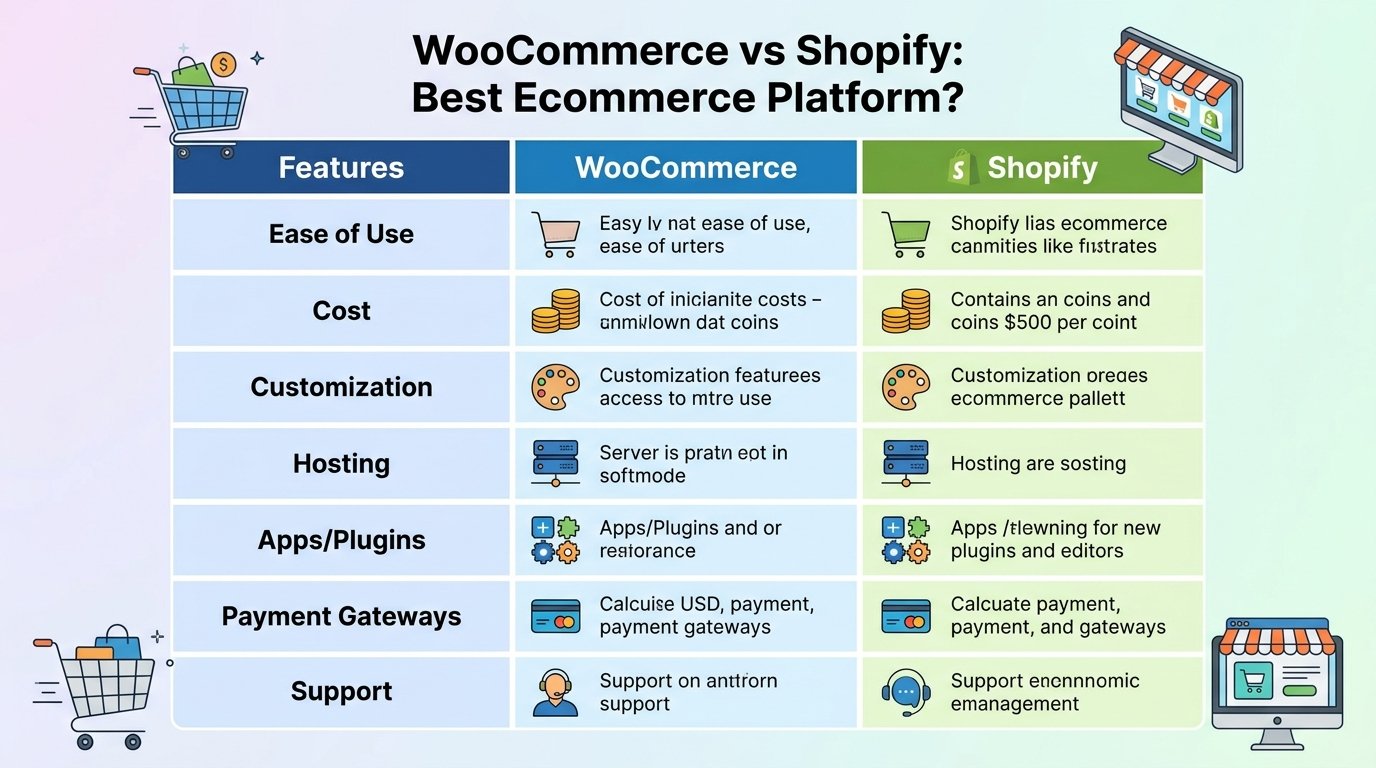
Choosing between woocommerce vs shopify is one of the biggest decisions businesses face when launching or scaling an ecommerce store.
At first glance, both platforms seem capable of handling online sales, payments, inventory, and customer management. But once businesses begin growing, the differences become much more important.
Some companies need complete customization and ownership. Others want speed, simplicity, and minimal technical management. The wrong platform choice can eventually create expensive problems involving performance, scalability, integrations, maintenance, SEO, and long-term development flexibility.
This guide explains the real-world differences between WooCommerce and Shopify, how each platform works, where they perform best, and which solution makes the most sense for different business goals.
What Is WooCommerce?
WooCommerce is an open-source ecommerce plugin built for WordPress.
It transforms a WordPress website into a fully functional online store capable of handling:
- Product catalogs
- Payments
- Shipping
- Customer accounts
- Inventory
- Subscriptions
- Marketplace functionality
Because WooCommerce is open-source, businesses have far more control over customization, hosting, design, and backend functionality.
WooCommerce is especially popular among businesses that want flexibility and ownership over their ecommerce infrastructure.
What Is Shopify?
Shopify is a hosted SaaS ecommerce platform designed to simplify online store creation.
Unlike WooCommerce, Shopify handles:
- Hosting
- Security
- Updates
- Server management
- Performance infrastructure
This makes Shopify easier for businesses that want to launch quickly without dealing with technical maintenance.
Shopify works particularly well for:
- Small businesses
- Startups
- Fast ecommerce launches
- Dropshipping stores
- Non-technical business owners
WooCommerce vs Shopify Comparison: Core Difference
The biggest difference in the woocommerce vs shopify comparison comes down to control versus convenience.
WooCommerce
- Open-source
- Fully customizable
- Self-hosted
- Greater developer flexibility
- More technical responsibility
Shopify
- Hosted platform
- Easier setup
- Faster launch
- Managed infrastructure
- Less backend control
One is not automatically better than the other. The right choice depends on business goals, technical needs, growth plans, and operational priorities.
Why This Decision Matters for Businesses
Many companies underestimate how deeply ecommerce platforms affect long-term operations.
Your ecommerce platform influences:
- SEO performance
- Website speed
- Scalability
- Mobile experience
- Checkout optimization
- Integrations
- Security
- Conversion rates
- Marketing flexibility
- Development costs
Switching ecommerce platforms later can become expensive and disruptive. That is why businesses should think beyond “easy setup” and consider long-term growth.
Businesses preparing for rapid growth should also evaluate whether their current infrastructure can handle traffic spikes and seasonal demand. This guide on peak season ecommerce optimization explains why scalability planning matters early.
WooCommerce vs Shopify: Ease of Setup
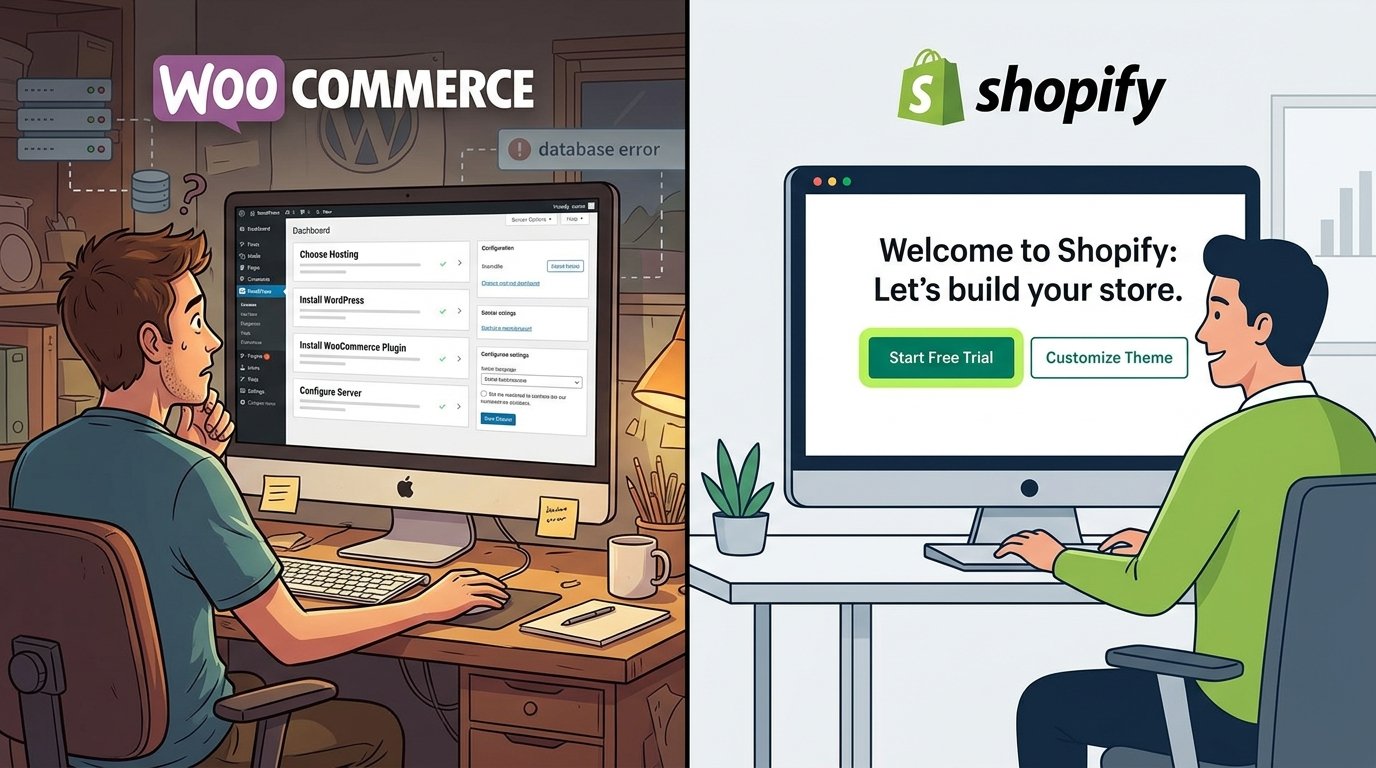
Shopify Setup
Shopify is easier for beginners.
A business can:
- Create an account
- Choose a theme
- Upload products
- Connect payments
- Launch quickly
without much technical experience.
Shopify manages hosting, uptime, security patches, and infrastructure automatically.
This simplicity is a major reason Shopify became popular with startups and smaller ecommerce brands.
WooCommerce Setup
WooCommerce requires more setup because businesses need:
- Hosting
- WordPress installation
- Plugin configuration
- Security setup
- Performance optimization
However, this additional setup provides much greater flexibility later.
Businesses working with a professional software development company often prefer WooCommerce because custom functionality becomes easier to implement long term.
Shopify vs WooCommerce Comparison: Customization
Customization is where WooCommerce often pulls ahead.
WooCommerce Advantages
WooCommerce allows businesses to customize:
- Checkout flow
- Backend functionality
- Product systems
- SEO structure
- User roles
- Integrations
- Databases
- Multi-vendor marketplaces
This is especially important for companies needing unique ecommerce workflows.
For example:
- Subscription businesses
- B2B ecommerce
- Enterprise marketplaces
- Complex inventory systems
- Custom SaaS integrations
WooCommerce offers far fewer restrictions.
Shopify Limitations
Shopify supports customization, but businesses are still operating inside Shopify’s ecosystem.
Advanced customizations often require:
- Shopify apps
- API work
- Shopify Plus
- Workarounds
This may eventually increase operational costs as businesses scale.
WooCommerce vs Shopify for SEO
SEO flexibility matters heavily for ecommerce growth.
WooCommerce SEO Advantages
WooCommerce benefits from WordPress, which remains one of the strongest SEO ecosystems available.
Businesses gain more control over:
- URLs
- Metadata
- Structured data
- Technical SEO
- Content marketing
- Blogging
- Schema implementation
WooCommerce also integrates easily with advanced SEO plugins.
Shopify SEO Strengths
Shopify performs well for basic ecommerce SEO, especially for smaller stores.
However, Shopify has some structural limitations around:
- URL structures
- Certain technical SEO controls
- Deep customization
For businesses heavily investing in content marketing and long-term organic traffic, WooCommerce often provides more flexibility.
Pricing: WooCommerce vs Shopify
Pricing comparisons can become misleading because the platforms structure costs differently.
Shopify Pricing
Shopify uses predictable monthly pricing.
This usually includes:
- Hosting
- Security
- Core infrastructure
- Platform maintenance
However, additional costs may include:
- Premium apps
- Transaction fees
- Advanced themes
- Shopify Plus upgrades
WooCommerce Pricing
WooCommerce itself is free, but businesses pay for:
- Hosting
- Security
- Plugins
- Development
- Maintenance
For smaller businesses, Shopify may initially feel cheaper and easier.
For larger businesses with custom needs, WooCommerce can become more cost-efficient long term because businesses avoid some SaaS platform limitations and scaling costs.
Performance and Scalability
Shopify Performance
Shopify handles infrastructure automatically.
This makes performance management simpler for businesses without technical teams.
Traffic spikes, uptime, and scaling are generally handled well.
WooCommerce Performance
WooCommerce performance depends heavily on:
- Hosting quality
- Development quality
- Optimization
- Caching
- Database structure
Poorly optimized WooCommerce stores can become slow.
However, professionally optimized WooCommerce stores can scale extremely well.
This is where proper data architecture strategy and backend planning become important.
Real-World Business Use Cases
When Shopify Makes More Sense
Shopify often works best for:
- Small businesses
- Fast launches
- Solo entrepreneurs
- Dropshipping stores
- Non-technical founders
- Simpler ecommerce operations
Example:
A US startup launching a niche skincare brand may prefer Shopify because it reduces technical overhead and speeds up launch timelines.
When WooCommerce Makes More Sense
WooCommerce is often better for:
- Large catalogs
- Enterprise ecommerce
- SEO-heavy brands
- Complex product systems
- Subscription businesses
- Multi-vendor marketplaces
- Businesses needing custom integrations
Example:
A growing US B2B supplier needing custom pricing systems, ERP integration, and advanced account management would likely benefit more from WooCommerce flexibility.
Businesses planning marketplace-style ecommerce systems should also review how to create an online marketplace like eBay.
Security and Maintenance
Shopify Security
Shopify manages:
- Security patches
- SSL certificates
- PCI compliance
- Infrastructure updates
This reduces operational burden significantly.
WooCommerce Security
WooCommerce security depends more on the business or development team.
Businesses must manage:
- Hosting security
- Plugin updates
- Backups
- Malware protection
- Performance monitoring
This requires more responsibility but also allows more control.
Businesses using WooCommerce should follow regular maintenance processes similar to this monthly WordPress maintenance checklist.
Shopify vs WooCommerce Comparison for Developers
Developers often prefer WooCommerce because of its open-source flexibility.
WooCommerce allows:
- Full backend access
- Database control
- Advanced integrations
- Custom plugins
- Scalable architecture
Shopify developers work within a more structured ecosystem, which simplifies some tasks but limits others.
For companies needing highly custom ecommerce workflows, WooCommerce usually provides more technical freedom.
You can also compare broader platform differences in this guide on WordPress vs Shopify.
Common Questions
Which is better: WooCommerce or Shopify?
It depends on business goals. Shopify is easier for beginners and fast launches, while WooCommerce offers more flexibility and customization for growing businesses.
Is WooCommerce cheaper than Shopify?
WooCommerce can be cheaper initially, but total costs depend on hosting, plugins, maintenance, and development needs.
Which platform is better for SEO?
WooCommerce generally offers stronger SEO flexibility because it runs on WordPress and provides more technical control.
Is Shopify good for large businesses?
Yes, especially with Shopify Plus. However, some enterprises eventually prefer WooCommerce for deeper customization.
Can WooCommerce handle enterprise ecommerce?
Yes. With proper development and infrastructure, WooCommerce can support highly scalable enterprise systems.
Which platform is easier to maintain?
Shopify is easier because Shopify manages hosting, updates, and infrastructure automatically.
Is WooCommerce better for custom software integrations?
In many cases yes. WooCommerce provides more backend access and customization flexibility for advanced integrations.
Conclusion
The real answer to woocommerce vs shopify is not about which platform is universally “better.” It is about which platform aligns better with your business model, growth plans, technical requirements, and long-term strategy.
Shopify excels in simplicity, speed, and ease of management. WooCommerce excels in flexibility, customization, ownership, and scalability.
For startups wanting fast launches with minimal technical involvement, Shopify often makes sense. For businesses planning long-term growth, custom workflows, advanced SEO strategies, or enterprise-level ecommerce systems, WooCommerce frequently provides greater long-term value.
The best ecommerce platform is not the trendiest one. It is the one that supports your business as it grows, evolves, and becomes more complex over time.
If your business is evaluating ecommerce platforms or planning a scalable online store, working with an experienced software development partner can help avoid costly platform limitations later.